Chances are they need it.
Thursday, May 12, 2011
Wednesday, April 20, 2011
jazzstudycool
I've been thinking of changing my twitter handle, because people think I'm a jazz-playing linguist rather than studying the linguistics of jazz, and thus only jazzing vicariously. Nevertheless I do like a bit of jazz and through my jazz-studied/playing brother and CD-buying dad, I've discovered a few favourites. Lately, I've gone back to listening to my jazzstudycool playlist and thought I'd share. I've included links to their websites as well for your convenience and edification.
Jazz
Avishai Cohen
Instrument: bass
Trio & solo
Fav albums: "Continuo", "Aurora"
Fav songs: "Calm", "Remembering" etc. etc.
Why: I don't necessarily like modern jazz but I love a lot of Avishai Cohen's stuff. 'Calm' and 'Remembering' are the most appropriately named songs I've ever heard. There's sweetly melancholic songs, non-standard rhythms, complex musical development or simple repetition, on Aurora he sings in English, Hebrew, Spanish, but the other albums are instrumental with middle eastern, african and jazz influences.
Clip: Remembering
Brian Bromberg*
Instrument: bass
Fav album: "Wood"
Fav songs: "Star-spangled banner" "Come together"
Why: Great album with the upright bass as a lead melodic instrument. Only got the one album at the moment, may have to find more. I'm not american but I love his version of "Star-spangled banner".
Clip: Come together
*website temporarily unavailable at time of publishing
Oscar Peterson Trio
Instrument: piano
Album: "We get requests"
Why: jazz piano great playing jazz standards. Cool enough to be calm, jazz enough to keep you moving and occasionally make you smile involuntarily. Not as much for those who don't like a 'traditional' jazz sound.
Clip: Corcovado (Quiet nights of quiet stars)

Jacques Loussier Trio
Instrument: piano
Fav album: "Air on a 'G' string"
Why: Bach played by a jazz trio. Pure classical music doesn't work for me but this has a nice jazz kick to it.
Clip: Air on a 'G' string (Bach)
Jazz vocal
Michael Buble
Instrument: vocal
Why: I've winnowed out the songs that are too cheesy for me. Sometimes you need some of that pop-jazz-swing-big band to make the study less dreary. In fact, nothing like some hugely dramatic music like the clip below to make everything seem significant, or insignificant as the mood may take you.
Clip: Cry me a river
Jamie Cullum
Instrument: vocal/piano
Fav songs: too many, but lately "If I ruled the world"
Why: His voice is less smooth than Buble's, he chooses more obscure jazz standards to reinterpret as well as pop songs to cover and writes originals too. Again, sometimes that pop-cool is great for a bit of cheer, but the sweetly-melancholic or ironically-upbeat or pensive music also provide a great study vibe.
Clip: I'm all over it
Non-jazz vocal
Geoffrey Gurrumul Yunupingu
Australia
Album: "Gurrumul"
Why: I go through phases when I skip the tracks from this CD, but I always respect it. His voice is unlike many others, most of his songs are sung in Gumatj and emote a non-urban, non-office environment.
Clip: Wiyathul

Asa
France/Nigeria
Album: "Beautiful imperfection"
Fav song: "Be my man"
Why: One of those artists I have trouble identifying the genre. Lovely voice, singing in English and another language. A bit of vocal joy to wake you up.
Clip: Be my man
Lisa Mitchell
Australia
Album: "Wonder"
Fav song: "Oh! Hark!" "Neopolitan Dreams"
Why: Although originally an Australian Idol contestant, her songs have that indie-sound, not all sugar-sweet, not all pop-cliche, not all romantic love.
Clip: Oh! Hark!
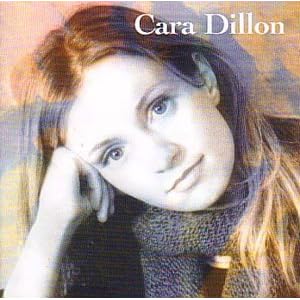
Cara Dillon
Ireland
Album: self-titled
Why: She sings Irish folk as it's meant to be sung. Sweet or sad, always strong.
Clip: Black is the color
Camille
France
Album: "Le fil"
Fav song: "Ta douleur"
Why: Quirky yet quality vocals, "Ta douleur" is a fun song extending the use of the voice as an instrument, looping and beatboxing.
Clip: Ta douleur
Jazz
Avishai Cohen
Instrument: bass
Trio & solo
Fav albums: "Continuo", "Aurora"
Fav songs: "Calm", "Remembering" etc. etc.
Why: I don't necessarily like modern jazz but I love a lot of Avishai Cohen's stuff. 'Calm' and 'Remembering' are the most appropriately named songs I've ever heard. There's sweetly melancholic songs, non-standard rhythms, complex musical development or simple repetition, on Aurora he sings in English, Hebrew, Spanish, but the other albums are instrumental with middle eastern, african and jazz influences.
Clip: Remembering
Brian Bromberg*
Instrument: bassFav album: "Wood"
Fav songs: "Star-spangled banner" "Come together"
Why: Great album with the upright bass as a lead melodic instrument. Only got the one album at the moment, may have to find more. I'm not american but I love his version of "Star-spangled banner".
Clip: Come together
*website temporarily unavailable at time of publishing
Oscar Peterson Trio
Instrument: piano
Album: "We get requests"
Why: jazz piano great playing jazz standards. Cool enough to be calm, jazz enough to keep you moving and occasionally make you smile involuntarily. Not as much for those who don't like a 'traditional' jazz sound.
Clip: Corcovado (Quiet nights of quiet stars)

Jacques Loussier Trio
Instrument: piano
Fav album: "Air on a 'G' string"
Why: Bach played by a jazz trio. Pure classical music doesn't work for me but this has a nice jazz kick to it.
Clip: Air on a 'G' string (Bach)
Jazz vocal
Michael Buble
Instrument: vocal
Why: I've winnowed out the songs that are too cheesy for me. Sometimes you need some of that pop-jazz-swing-big band to make the study less dreary. In fact, nothing like some hugely dramatic music like the clip below to make everything seem significant, or insignificant as the mood may take you.
Clip: Cry me a river
Jamie Cullum
Instrument: vocal/piano
Fav songs: too many, but lately "If I ruled the world"
Why: His voice is less smooth than Buble's, he chooses more obscure jazz standards to reinterpret as well as pop songs to cover and writes originals too. Again, sometimes that pop-cool is great for a bit of cheer, but the sweetly-melancholic or ironically-upbeat or pensive music also provide a great study vibe.
Clip: I'm all over it
Non-jazz vocal
Geoffrey Gurrumul Yunupingu
Australia
Album: "Gurrumul"
Why: I go through phases when I skip the tracks from this CD, but I always respect it. His voice is unlike many others, most of his songs are sung in Gumatj and emote a non-urban, non-office environment.
Clip: Wiyathul

Asa
France/Nigeria
Album: "Beautiful imperfection"
Fav song: "Be my man"
Why: One of those artists I have trouble identifying the genre. Lovely voice, singing in English and another language. A bit of vocal joy to wake you up.
Clip: Be my man
Lisa Mitchell
Australia
Album: "Wonder"
Fav song: "Oh! Hark!" "Neopolitan Dreams"
Why: Although originally an Australian Idol contestant, her songs have that indie-sound, not all sugar-sweet, not all pop-cliche, not all romantic love.
Clip: Oh! Hark!
Cara Dillon
Ireland
Album: self-titled
Why: She sings Irish folk as it's meant to be sung. Sweet or sad, always strong.
Clip: Black is the color
Camille
France
Album: "Le fil"
Fav song: "Ta douleur"
Why: Quirky yet quality vocals, "Ta douleur" is a fun song extending the use of the voice as an instrument, looping and beatboxing.
Clip: Ta douleur
Tuesday, April 19, 2011
Unplug
I've been thinking a bit about unplugging lately. In fact it's been a bit of a meme lately: first this story reports withdrawal symptoms in young people who give up electronic media for 24 hours; then this webcomic suggested things to do when the internet won't connect. Then, via @maryam_bakht, a story in the NY times about the digital revolution "making it fashionable to be rude" and people who "treat their phones like a Tamagotchi". And lastly, today, via @emckean, a tumblr blog post about renaming "airplane mode" on the mobile phone as "interesting persion mode" - using it to take yourself off the grid for a while to give your full attention to the person you're with.
I'm sure the fact that I used the word "meme" in the opening sentences there says something about my own need to unplug.
I had a bit of an overdose of the computer the other day and so extracted myself from the office to sit by the river and enjoy, for lack of a more poetic way to say it, the outdoors. It was lovely. I do encourage people to get outside in the fine weather and enjoy it. Remind yourself about fresh air and noise and RL*!
At the same time, sometimes we can't get away. We have to use a number of electronic media simultaneously and they can encourage productivity. Without Facebook and Twitter I wouldn't have got half of those links above. I am typing this, while listening to my "jazzstudycool" playlist on my ipod. And yesterday I had a productive stint study-buddying with a friend in NZ who was online at the same time. Although we couldn't hear or see each other, we assumed the other was studying and so felt the peer pressure to knuckle down, but at the same time had someone to throw the occasional comment to rather than detour onto social media.
So what's the point of this? Basically just to compile all the links above. Read them - they are interesting! And then force yourself from the computer for fifteen minutes, if only to make you appreciate it more when you get back on.
*Real Life to those of you who live so much less of your life online that you have no need for an acronym for the alternative.
I'm sure the fact that I used the word "meme" in the opening sentences there says something about my own need to unplug.
I had a bit of an overdose of the computer the other day and so extracted myself from the office to sit by the river and enjoy, for lack of a more poetic way to say it, the outdoors. It was lovely. I do encourage people to get outside in the fine weather and enjoy it. Remind yourself about fresh air and noise and RL*!
At the same time, sometimes we can't get away. We have to use a number of electronic media simultaneously and they can encourage productivity. Without Facebook and Twitter I wouldn't have got half of those links above. I am typing this, while listening to my "jazzstudycool" playlist on my ipod. And yesterday I had a productive stint study-buddying with a friend in NZ who was online at the same time. Although we couldn't hear or see each other, we assumed the other was studying and so felt the peer pressure to knuckle down, but at the same time had someone to throw the occasional comment to rather than detour onto social media.
So what's the point of this? Basically just to compile all the links above. Read them - they are interesting! And then force yourself from the computer for fifteen minutes, if only to make you appreciate it more when you get back on.
PS. And this is why working in a cafe works for me (via @lynneguist)
*Real Life to those of you who live so much less of your life online that you have no need for an acronym for the alternative.
Wednesday, April 6, 2011
Update
I referred someone to my blog today and when I looked at it, it seemed a little unloved. Pretty, but unloved. So I thought I should write an update. The news of the week is that I finished my work so am now solely a PhD student. It feels great - being able to study for more than 2 full days in a row almost seems like a luxury! So advice point 1 to other PhD students: work, but know when to say no more! My supervisor (who was also my boss) has been very supportive. Last week was also the 2 year anniversary of starting my studies and therefore also marked exactly a year until I submit my thesis. I might not submit right on 3 years but the plan is to knuckle down and do everything I can to at least get close. I have too many friends who've ended up out of candidature, out of money (not necessarily their fault), and I don't want to be there.
Study-wise at the moment, I'm bouncing between reading up on Appraisal and Genre, submitting abstracts to conferences, and trying to finish two articles. Not sure that I'll be able to afford to go to the conferences, but gotta put the abstracts in first before I find out. They're also a useful deadline - there's a certain amount of reading and analysis you have to do before you can propose what to write a paper about. So advice point 2: submit abstracts to conferences, even if you end up unable to go.
Which brings me to the articles. I'm writing based on my presentation at 5ICOM (5th International Conference on Multimodality). It as supposed to be one article, but it went too long so I'm trying to turn them into two articles. The writing was surprisingly enjoyable, the refining is a bit of struggle at times. We'll get there in the end. I'm trying to get them into a good enough condition to send them to others for feedback. Again I have friends who have submitted their thesis or are planning to and then write a few articles to get a few publications out on their thesis to improve their chances of getting a job. Or if they have a job lined up, they're trying to juggle writing articles with settling into a new job or even move cities. Advice point 3: write early, if possible!
So that's where I'm at. I've also started a (old-fashioned, handwritten) journal to keep myself accountable to myself. I got a lovely journal for Christmas and momentarily considered writing my thesis in it, but who's going to write a thesis by hand these days? I used to write journals, but stopped when I came back from France as day-to-day life seemed comparatively boring and not worthy of journalling. If there's any time that's worthy of recording, this should be it! And who knows, maybe one day I can do some sort of linguistic analysis on my journalling over the years, or reflect on the thesis-writing process.
That's the beautiful thing about studying linguistics - EVERYTHING is potential data. As I tweeted today - Ouroboros! The self perpetuating, self eating snake. Not sure that analogy is as good as all that, but hopefully you know what I mean.
Study-wise at the moment, I'm bouncing between reading up on Appraisal and Genre, submitting abstracts to conferences, and trying to finish two articles. Not sure that I'll be able to afford to go to the conferences, but gotta put the abstracts in first before I find out. They're also a useful deadline - there's a certain amount of reading and analysis you have to do before you can propose what to write a paper about. So advice point 2: submit abstracts to conferences, even if you end up unable to go.
Which brings me to the articles. I'm writing based on my presentation at 5ICOM (5th International Conference on Multimodality). It as supposed to be one article, but it went too long so I'm trying to turn them into two articles. The writing was surprisingly enjoyable, the refining is a bit of struggle at times. We'll get there in the end. I'm trying to get them into a good enough condition to send them to others for feedback. Again I have friends who have submitted their thesis or are planning to and then write a few articles to get a few publications out on their thesis to improve their chances of getting a job. Or if they have a job lined up, they're trying to juggle writing articles with settling into a new job or even move cities. Advice point 3: write early, if possible!
So that's where I'm at. I've also started a (old-fashioned, handwritten) journal to keep myself accountable to myself. I got a lovely journal for Christmas and momentarily considered writing my thesis in it, but who's going to write a thesis by hand these days? I used to write journals, but stopped when I came back from France as day-to-day life seemed comparatively boring and not worthy of journalling. If there's any time that's worthy of recording, this should be it! And who knows, maybe one day I can do some sort of linguistic analysis on my journalling over the years, or reflect on the thesis-writing process.
That's the beautiful thing about studying linguistics - EVERYTHING is potential data. As I tweeted today - Ouroboros! The self perpetuating, self eating snake. Not sure that analogy is as good as all that, but hopefully you know what I mean.
Tuesday, March 15, 2011
Slideshow: 6 things I wish someone had told me at the beginning of my PhD
Here's a presentation I gave on Friday to new Humanities research students based on my own experience of Masters/PhD based on a blog I wrote about 6 months ago.
Tuesday, March 1, 2011
Word of the Week
I periodically have a word of the week. It is often valid for longer than a week, and I don't have one at all times, but "Word of the Week" is catchier than "Word of an Indeterminate Period of Time". I also have a whiteboard next to my desk. So I write my word of the week on the whiteboard and leave it there until it soaks into my brain. Previous words of the week (or word of the weeks) include epistemology, ontology, hyponomy, and methodological framework. My current word of the week is 'prosody'. I think I've got my head around it, but I haven't quite totally digested the meaning - it still feels forced and unnatural. So on my whiteboard it shall stay a while longer.
Friday, February 18, 2011
Musemes and layers of signification
Permit me an idle musing. I need to think something out and sometimes that works better in text. Oh, and that's musemes not museums.
I have a stack of books on my desk relating to semiotics, music and musical discourse. I don't expect them to be of any use other than to establish how my approach differs from the majority of semiotic approach to music. At least that's what I'm hoping and it should (should) be fairly straight forward: they all seem interested in explaining how the sound of music has meaning like a language. My baseline (bassline? forgive the pun) response to this is that music is analogous to language, but only analogous, but I won't go into that right now. Bohlman and Cook have discussed this better than I shall. But before we even get to that, my approach differs in what mode (in the linguistic not musical sense) of music I'm looking at, because I'm interested in the semiotics of music as it relates to written music. (That's the problem with the word 'music' - it is at once an audio experience, a participatory experience, a recording, written directions for playing music and a whole host of other things.) For the purposes of my study into academic student writing, I'm trying to relate the meaning in the words to the meaning of the music notation incorporated in the texts.
The reading that has prompted this blog mentions a term used by Seeger and Tagg: musemes - musical morphemes. A morpheme is the smallest unit of meaning; so 'hat' is one morpheme, but 'hats' has two morphemes - one for 'hat' and 's' to indicate plurality. So a museme is the smallest unit of musical sense. Now I haven't read much further to understand just what they mean by this, though I understand it to involve intonations, intervals and so on. However it made me think - my problem with thinking about the semiotics of music from a traditional saussurian sense is that it's very difficult to identify the smallest unit of musical sense.
One might suggest the smallest unit of musical sense is a single note. Take for example the following note:
Let us assume there is a treble clef preceding this note at some point. The note would therefore be an F. Or more precisely, its pitch would be F. This is not the only meaning realised in this representation. By its colour and shape, we also identify it as a crotchet, or quarter-note, which means that it should be played for the duration of a single beat. Just as 'hats' had two morphemes, so this single note has two meanings - pitch and note value.* So far so simple.
Within a real context however, these notes do not occur in isolation, just as words in a language do not occur in isolation. I come from a school of linguistics which insists that language be studied in real world contexts, or more specifically, texts. And so if we put the note in a context we might find something like this:
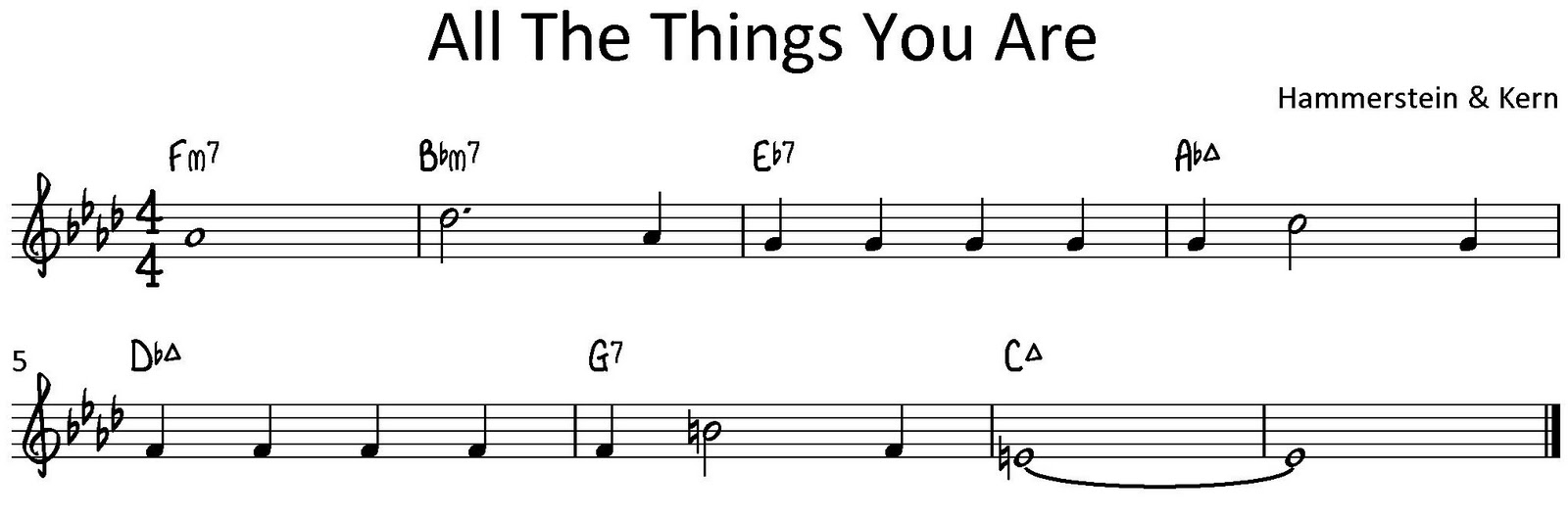
Let us specify our F to be on the first beat in bar 6. Our friendly F which in isolation had two layers of meaning - pitch and note value - now has several other layers of meaning that an analyst may comment on. It has intervallic relation with the notes which precede and follow it: it is the same note as the four preceding it, and is then followed by a B natural. When I tried to clarify this interval with my brother without giving him the context he wrote '"Tritone" augmented 4th or diminished 5th'. Despite this sequentiality, it would not be played in isolation and thus has a scale degree of a flat 7 to the chord played by other parts and indicated in the notation by the G7 written over the stave. I introduced this note as being on the first beat of bar 6 - thus we find added rhythmic, intonation and contextual information. Rhythmic, as it is the first beat of four-beat bar; intonation, as the first beat in four-four rhythm is habitually emphasised; and contextual as we note where it comes within the context of the whole piece. I haven't even mentioned yet that this piece is a broadway tune and also a jazz standard, or on what instrument it is played.
And so we find layers of signification occuring with a single note. What is the smallest unit of meaning? And how are some of these qualities indicated? An educated musician would be able to identify all of these qualities and even more just by looking at the piece of music and yet how precisely can we pinpoint how this information is conveyed? By spatial layout as well as contextual generic knowledge?
And that's why I feel the approach of multimodal, or multisemiotic, analysis, stemming as it does from Systemic Functional Linguistics (SFL), is useful. SFL takes a multifunctional, stratified approach to language, understanding the same text to have experiential (relating to the world of experience, content), interpersonal (relating to the relations between reader and writer, or speaker and listener, or composer and performer and analyst) and textual (relating to the construction of the text as a whole) meanings simultaneously.
Now I just have to write a dissertation about it and explain it more academically.
*Disclaimer: I should check all my music terminology with a musicologist/musician before I publish them, but for the purpose of the blog just go with me and let me know if I've severely misrepresented.
I have a stack of books on my desk relating to semiotics, music and musical discourse. I don't expect them to be of any use other than to establish how my approach differs from the majority of semiotic approach to music. At least that's what I'm hoping and it should (should) be fairly straight forward: they all seem interested in explaining how the sound of music has meaning like a language. My baseline (bassline? forgive the pun) response to this is that music is analogous to language, but only analogous, but I won't go into that right now. Bohlman and Cook have discussed this better than I shall. But before we even get to that, my approach differs in what mode (in the linguistic not musical sense) of music I'm looking at, because I'm interested in the semiotics of music as it relates to written music. (That's the problem with the word 'music' - it is at once an audio experience, a participatory experience, a recording, written directions for playing music and a whole host of other things.) For the purposes of my study into academic student writing, I'm trying to relate the meaning in the words to the meaning of the music notation incorporated in the texts.
The reading that has prompted this blog mentions a term used by Seeger and Tagg: musemes - musical morphemes. A morpheme is the smallest unit of meaning; so 'hat' is one morpheme, but 'hats' has two morphemes - one for 'hat' and 's' to indicate plurality. So a museme is the smallest unit of musical sense. Now I haven't read much further to understand just what they mean by this, though I understand it to involve intonations, intervals and so on. However it made me think - my problem with thinking about the semiotics of music from a traditional saussurian sense is that it's very difficult to identify the smallest unit of musical sense.
One might suggest the smallest unit of musical sense is a single note. Take for example the following note:
Let us assume there is a treble clef preceding this note at some point. The note would therefore be an F. Or more precisely, its pitch would be F. This is not the only meaning realised in this representation. By its colour and shape, we also identify it as a crotchet, or quarter-note, which means that it should be played for the duration of a single beat. Just as 'hats' had two morphemes, so this single note has two meanings - pitch and note value.* So far so simple.
Within a real context however, these notes do not occur in isolation, just as words in a language do not occur in isolation. I come from a school of linguistics which insists that language be studied in real world contexts, or more specifically, texts. And so if we put the note in a context we might find something like this:
Let us specify our F to be on the first beat in bar 6. Our friendly F which in isolation had two layers of meaning - pitch and note value - now has several other layers of meaning that an analyst may comment on. It has intervallic relation with the notes which precede and follow it: it is the same note as the four preceding it, and is then followed by a B natural. When I tried to clarify this interval with my brother without giving him the context he wrote '"Tritone" augmented 4th or diminished 5th'. Despite this sequentiality, it would not be played in isolation and thus has a scale degree of a flat 7 to the chord played by other parts and indicated in the notation by the G7 written over the stave. I introduced this note as being on the first beat of bar 6 - thus we find added rhythmic, intonation and contextual information. Rhythmic, as it is the first beat of four-beat bar; intonation, as the first beat in four-four rhythm is habitually emphasised; and contextual as we note where it comes within the context of the whole piece. I haven't even mentioned yet that this piece is a broadway tune and also a jazz standard, or on what instrument it is played.
And so we find layers of signification occuring with a single note. What is the smallest unit of meaning? And how are some of these qualities indicated? An educated musician would be able to identify all of these qualities and even more just by looking at the piece of music and yet how precisely can we pinpoint how this information is conveyed? By spatial layout as well as contextual generic knowledge?
And that's why I feel the approach of multimodal, or multisemiotic, analysis, stemming as it does from Systemic Functional Linguistics (SFL), is useful. SFL takes a multifunctional, stratified approach to language, understanding the same text to have experiential (relating to the world of experience, content), interpersonal (relating to the relations between reader and writer, or speaker and listener, or composer and performer and analyst) and textual (relating to the construction of the text as a whole) meanings simultaneously.
Now I just have to write a dissertation about it and explain it more academically.
*Disclaimer: I should check all my music terminology with a musicologist/musician before I publish them, but for the purpose of the blog just go with me and let me know if I've severely misrepresented.
Subscribe to:
Posts (Atom)